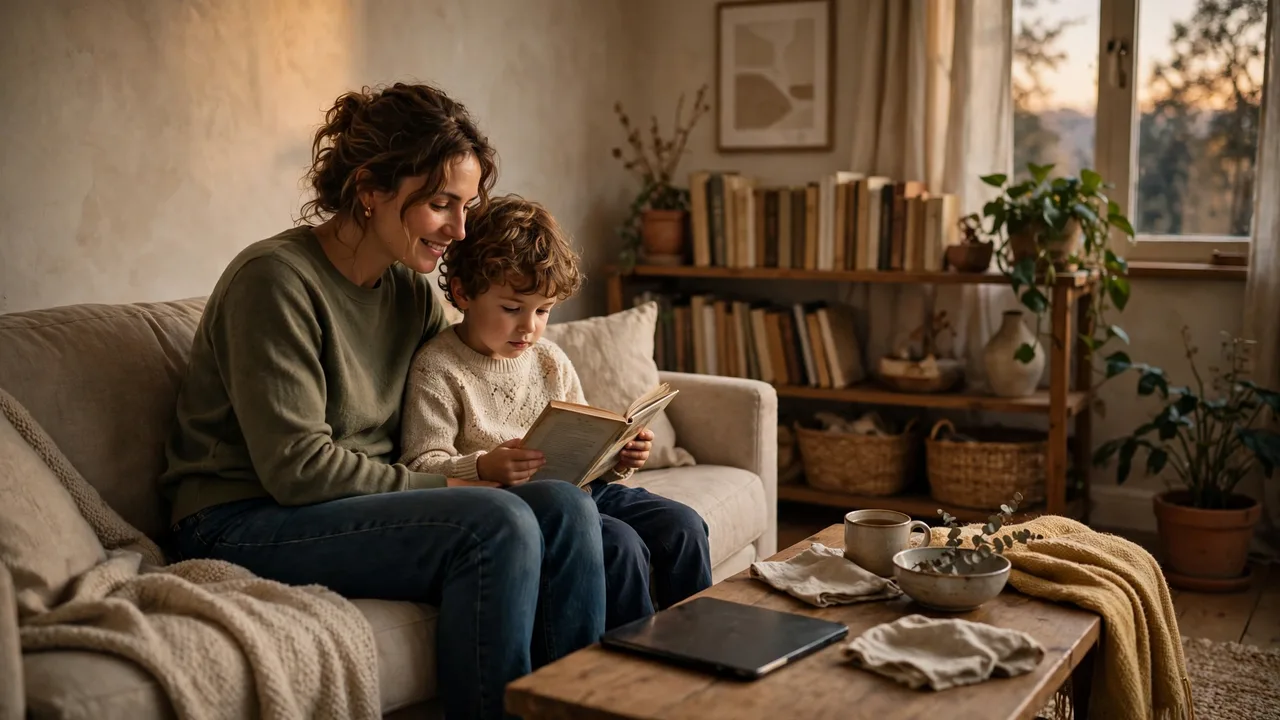
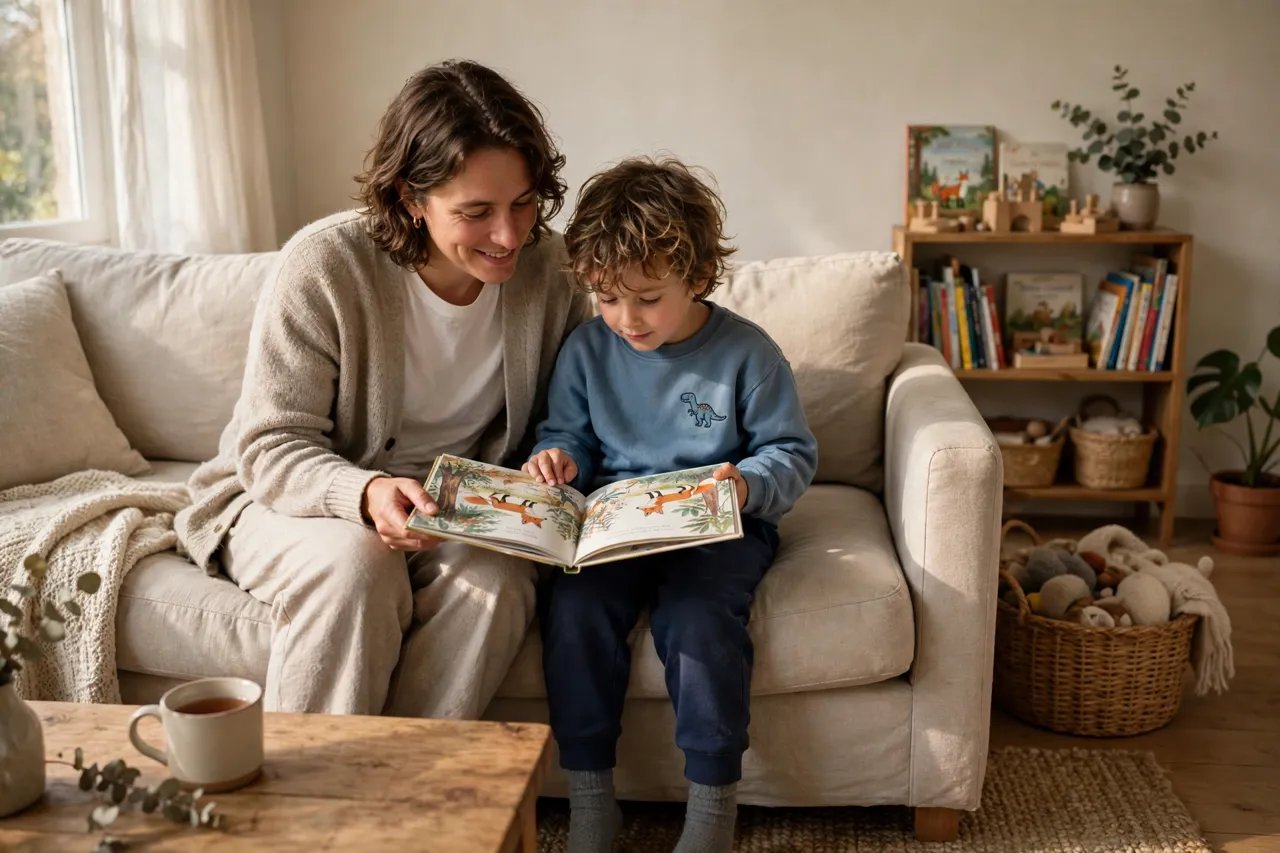
Many parents want to help your child enjoy reading, yet the more reading feels like a chore, the more children resist it. The good news is that a love of books rarely comes from pressure. It grows from small, pleasant experiences repeated often: a story before bed, a comic chosen at the library, a parent reading alongside a child with a cup of tea. This guide explains how to build those moments into everyday family life so that reading becomes something your child chooses, not something they are made to do.
Why Enjoyment Matters More Than Early Speed
Children who read for pleasure tend to build bigger vocabularies, stronger comprehension and more confidence across every school subject, not just English. Reading widely exposes them to sentence patterns, ideas and worlds they would never meet in daily conversation. It also supports the same growth you nurture when you support cognitive development through play and exploration: curiosity, problem solving and imagination.
Just as importantly, stories help children understand feelings — their own and other people’s. A child who follows a character through a difficult friendship or a frightening first day at school is practising empathy in a safe way, which complements the work you do to help children develop emotional intelligence and self-awareness. When reading feels rewarding, children return to it on their own, and that voluntary practice is what turns a beginner into a fluent, confident reader.
Start With Choice, Not Correction
The single most powerful change is to let your child choose what to read. Comics, joke books, football annuals, magazines, graphic novels and fact books all count. A child who picks a book is already motivated; a child who is handed a book they find boring learns only that reading is dull. Visit a library or bookshop together and let them browse without steering them towards what you think they should read.
During reading time, resist the urge to correct every mistake. If your child stumbles on a word, wait a moment — self-correction builds independence. Jumping in constantly turns reading into a test. Keep sessions short and successful: ten happy minutes beat thirty reluctant ones, and you can lengthen them gradually as stamina grows.
Make Reading Part of the Daily Routine
Habits form around routines, and reading is no different. Anchor it to something that already happens every day: after dinner, before bed, or during a quiet quarter of an hour after school. This works for the same reason consistent parenting routines support academic growth — children relax into what they can predict.
- Keep books where your child spends time: by the bed, in the car, near the sofa.
- Let your child see you reading for pleasure, not only on a phone.
- Read aloud together even after your child can read alone; shared stories stay special.
- Talk about books casually — a funny character, a surprising ending — the way you would talk about a film.
Match Books to Your Child’s World
Children engage most with stories connected to their own interests and experiences. A child who loves dinosaurs will persist with a harder book about dinosaurs long after giving up on an easier one about something they find dull. Librarians and teachers can suggest titles matched to both age and obsession, and series are especially useful: familiar characters lower the effort of starting each new book.
Reading also feeds naturally into other kinds of learning. Talking through a story’s problem and ending strengthens the same thinking skills used in play-based learning activities that boost academic success, and discussing characters’ choices can open gentle conversations that encourage positive social skills and healthy peer relationships.
What to Do When Your Child Says Reading Is Boring
First, check the fit, not the child. Books that are too hard make reading feel like failure; books that are too babyish feel embarrassing. The right level is one where your child can read most words comfortably but still meets a few new ones. Second, widen the format. Audiobooks listened to together, paired with the printed book, help reluctant readers follow longer stories and build the vocabulary that later makes independent reading easier.
Finally, protect the pleasure. Avoid paying for pages or turning reading into a bargaining chip; rewards tied to finishing can quietly teach that reading is work to be compensated. Praise effort and share enthusiasm instead. As your child grows, the habit you build now becomes the foundation for the independent learning and consistent study habits that increase productivity and focus in later school years.
Reading Together at Different Ages
The approach changes as your child grows, but the principle — pleasure first — stays the same. For toddlers and preschoolers, board books, rhymes and repetition are ideal. Young children love hearing the same story again and again, and that repetition is quietly teaching them how language works. Point at pictures, ask what might happen next, and let them “read” the story back to you from memory.
For children aged five to eight who are learning to decode, alternate pages or take turns with tricky paragraphs so the story keeps flowing. Keep a finger on encouragement rather than accuracy. For older children, aged nine to twelve, shared reading often shifts into shared discussion: read the same novel separately, swap recommendations, or listen to an audiobook together on car journeys. Respecting an older child’s taste — including genres you would not choose yourself — keeps the habit alive through the years when many children drift away from books.
Build a Reading-Friendly Home
Small environmental changes make a real difference. A low shelf or basket of books in the living room invites browsing in a way a closed cupboard never does. A comfortable corner with a cushion and decent light gives reading a place of its own. Regular library visits cost nothing and add the excitement of choosing from hundreds of covers; many libraries also run story sessions and reading challenges that make books feel social rather than solitary.
It also helps to protect some screen-free time in the evening. This is not about banning devices — it is about making sure books get a fair chance to compete for your child’s attention. When the half hour before bed is calm and book-based, children settle better and associate reading with comfort and closeness, which is exactly the feeling that keeps them coming back tomorrow night as well.
Key Takeaways for Parents
To help your child enjoy reading, focus on choice, routine and pleasure rather than pressure and correction. Let them pick books that match their interests, read together a little every day, talk about stories naturally, and keep the experience warm and unhurried. Small moments, repeated often, are what turn reading from a school task into a lifelong habit your child carries into every subject they study.