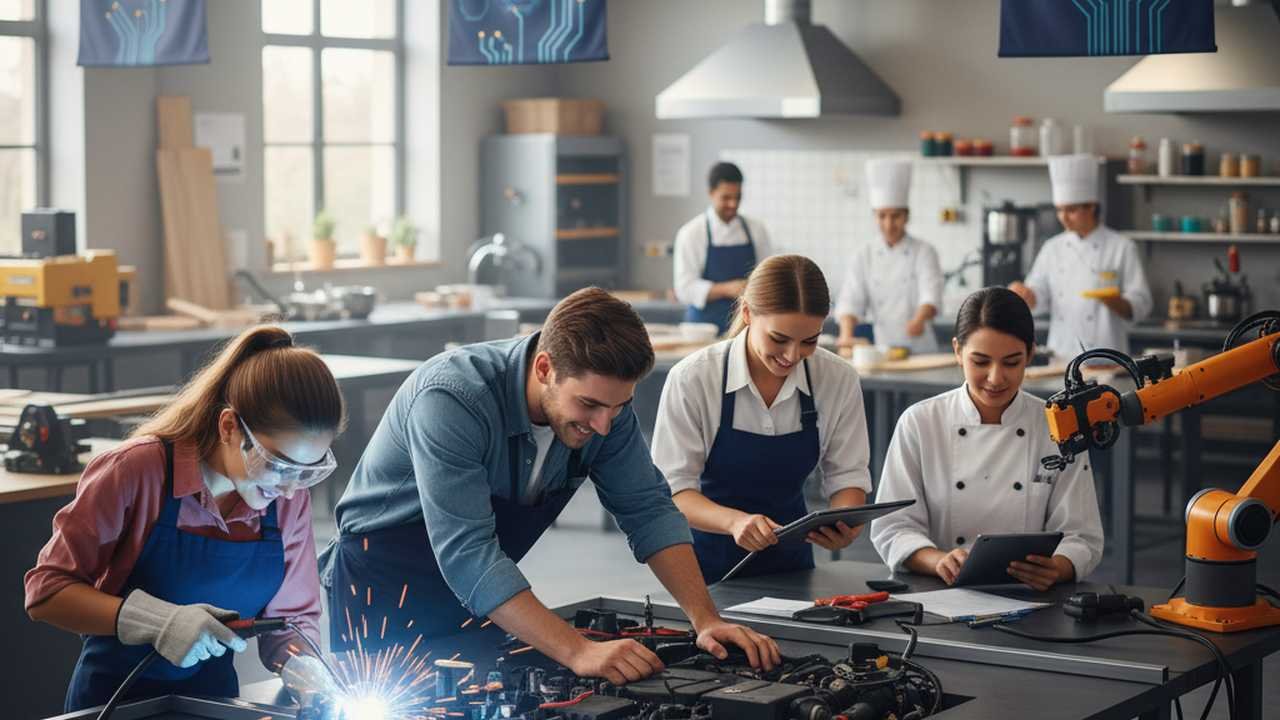

In the bustling metropolis of Seoul, a quiet revolution is taking place. It’s not in the towering skyscrapers or the neon-lit streets but in the classrooms where the future of skilled trades is being forged. The fusion of STEAM education – Science, Technology, Engineering, Arts, and Mathematics – is reshaping how young minds are prepared for careers that demand both intellect and dexterity. If you’re standing on the sidelines, waiting for the right moment to dive into this transformative wave, the time is now. Opportunities are slipping away, and those who hesitate may find themselves left behind.
The Pulse of Seoul’s Vocational Renaissance
Seoul, a city known for its technological prowess, is increasingly turning its gaze toward vocational education. The integration of STEAM principles into vocational training is not just a trend; it’s a necessity. The Seoul Metropolitan Government’s initiative to open ten Youth Employment Academy campuses underscores this shift. These academies are designed to equip job seekers in their 20s and 30s with practical competencies in emerging fields like AI and fintech, blending traditional vocational skills with cutting-edge technology. This approach ensures that graduates are not only job-ready but also future-ready, poised to thrive in an ever-evolving job market.
However, this isn’t just about keeping pace with global trends. It’s about creating a workforce that can innovate, adapt, and lead. The emphasis on hands-on learning, problem-solving, and interdisciplinary knowledge ensures that students are not mere recipients of information but active participants in their learning journey. This paradigm shift is producing a new generation of tradespeople who are as comfortable with a soldering iron as they are with a circuit diagram, embodying the true spirit of STEAM education.
Why Vocational Skills Are the Bedrock of Tomorrow’s Economy
In a world increasingly dominated by automation and artificial intelligence, the value of human craftsmanship is soaring. Skilled trades are no longer seen as fallback options but as prestigious and lucrative career paths. Electricians, plumbers, carpenters, and HVAC technicians are in high demand, commanding salaries that rival those of many white-collar professions. This resurgence is not just a fleeting moment; it’s a fundamental shift in how we perceive work and value skill.
Moreover, the rapid advancement of technology has created a convergence between traditional trades and modern innovation. A welder today might also be proficient in 3D modeling, while a carpenter could be adept at using CNC machines. This blending of skills is a direct result of the STEAM education model, which encourages the integration of arts and technology into practical applications. As industries evolve, so too must the skill sets of those who drive them forward.
Seizing the Moment: How to Embark on Your Vocational Journey
The window of opportunity is wide open, but it’s not going to stay that way forever. To capitalize on the burgeoning demand for skilled trades, one must act swiftly and decisively. Begin by identifying the trade that resonates with your interests and strengths. Whether it’s electrical work, plumbing, welding, or carpentry, each path offers unique challenges and rewards.
Next, seek out reputable training programs that offer a blend of theoretical knowledge and hands-on experience. Institutions that incorporate STEAM principles into their curriculum provide a comprehensive education that prepares you for the complexities of modern trades. Look for programs that offer certifications recognized by industry leaders, as these credentials can significantly enhance your employability.
Finally, immerse yourself in the community. Join forums, attend workshops, and network with professionals in your chosen field. The world of skilled trades is as much about relationships as it is about skills. Building a strong network can open doors to apprenticeships, job opportunities, and mentorships that are invaluable as you advance in your career.
Real-World Success Stories: Inspiration from the Field
Consider the story of Jihoon, a graduate of Seoul’s Youth Employment Academy. Initially uncertain about his career path, Jihoon enrolled in a program that combined electrical training with robotics. Today, he works as a systems integrator, designing and installing automated systems for manufacturing plants. His journey from a novice to a sought-after professional exemplifies the power of combining vocational skills with STEAM education.
Similarly, Minji, a former art student, found her calling in interior design. By enrolling in a program that integrated design principles with sustainable construction techniques, she now runs her own eco-friendly design firm. Her success highlights how the fusion of arts and technology can lead to innovative and profitable ventures in the trades.
The Global Perspective: How Seoul’s Model is Influencing the World
Seoul’s approach to vocational education is not just a local phenomenon; it’s setting a global standard. Countries around the world are looking to South Korea’s integration of STEAM into vocational training as a model for their own educational reforms. The emphasis on interdisciplinary learning, practical skills, and technological integration is resonating with policymakers and educators internationally.
For instance, the United States has begun to adopt similar models in its vocational schools, incorporating elements of STEAM education to better prepare students for the demands of the modern workforce. This global shift underscores the effectiveness of Seoul’s approach and its potential to inspire change worldwide.
Overcoming Challenges: Navigating the Path to Success
While the opportunities in skilled trades are abundant, the journey is not without its challenges. One of the primary obstacles is the lingering societal stigma that associates vocational education with lesser status. Overcoming this perception requires a concerted effort from educators, industry leaders, and the media to highlight the value and prestige of skilled trades.
Another challenge is the rapid pace of technological change. Trades that were once considered traditional are now being transformed by innovations in automation, artificial intelligence, and sustainable practices. Staying abreast of these developments necessitates continuous learning and adaptability. Programs that offer ongoing education and training are crucial in ensuring that professionals remain competitive and proficient in their fields.
The Future is Now: Embracing the STEAM Advantage
The fusion of STEAM education with vocational training is not a passing trend; it’s the future of skilled trades. As industries become more complex and technology-driven, the demand for professionals who possess both practical skills and technological acumen will continue to rise. Embracing this integrated approach to education equips individuals with the tools they need to succeed in a rapidly changing world.
For those considering a career in the trades, now is the time to act. The opportunities are vast, the rewards are substantial, and the path is clearer than ever. By choosing to pursue vocational education through a STEAM lens, you are not just preparing for a job; you are positioning yourself at the forefront of a dynamic and essential sector.
Don’t let this moment pass you by. The world of skilled trades is waiting for innovators, creators, and problem-solvers. Will you answer the call?