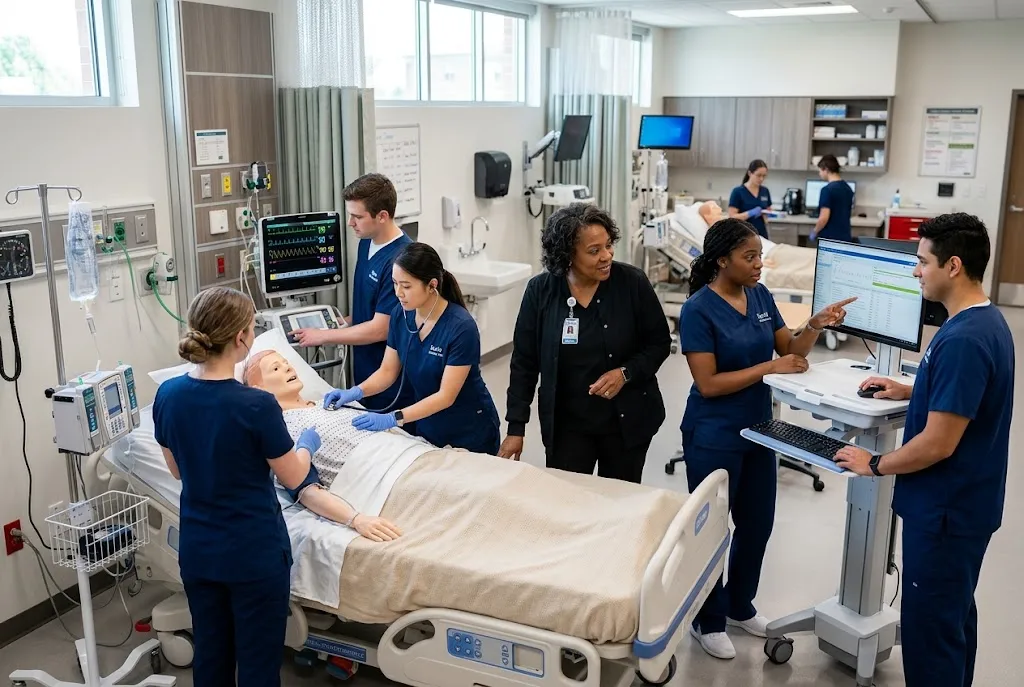
Imagine a classroom where students don’t just read about science – they build rockets, program robots, and design their own experiments. This isn’t a futuristic fantasy; it’s the transformative power of hands-on STEM education. As traditional teaching methods give way to more interactive approaches, the impact of hands-on learning becomes undeniable. Students are not merely passive recipients of information; they are active participants in their educational journey, leading to deeper understanding and long-lasting knowledge retention.
The Shift from Passive to Active Learning
Traditional education often relies on lectures and textbooks, where students absorb information without engaging with it actively. While this method has its place, research shows that active participation enhances learning. Hands-on STEM projects immerse students in the learning process, allowing them to apply theoretical knowledge to real-world problems. This shift from passive to active learning fosters critical thinking, problem-solving skills, and a deeper understanding of complex concepts.
For instance, instead of merely reading about the principles of physics, students might construct simple machines or conduct experiments that demonstrate these principles in action. This experiential learning approach not only makes abstract concepts tangible but also encourages students to think creatively and analytically. The process of trial and error, observation, and reflection solidifies their understanding and makes learning more meaningful.
Enhancing Knowledge Retention Through Engagement
Engagement is a key factor in memory retention. When students are actively involved in their learning, they are more likely to remember the material. Hands-on STEM projects captivate students’ attention and spark their curiosity, making the learning experience more enjoyable and memorable. Whether it’s building a bridge from spaghetti or coding a simple game, these activities require students to think critically and apply their knowledge, reinforcing what they’ve learned.
Studies have shown that students who engage in hands-on learning retain information longer and perform better on assessments. This is because active involvement creates stronger neural connections, making it easier to recall information when needed. Additionally, hands-on projects often involve collaboration, further enhancing learning through discussion and shared problem-solving.
Fostering Critical Thinking and Problem-Solving Skills
Hands-on STEM projects challenge students to think critically and solve problems creatively. These projects often present real-world challenges that require students to apply their knowledge and skills to find solutions. For example, designing a water filtration system involves understanding concepts from chemistry, engineering, and environmental science. Students must consider various factors, test their ideas, and refine their designs, all while working within constraints such as time, resources, and cost.
This process mirrors the problem-solving scenarios students will encounter in their future careers. By engaging in hands-on projects, students develop the ability to analyze situations, think critically, and devise effective solutions. These skills are invaluable in today’s rapidly changing world, where the ability to adapt and innovate is crucial.
Promoting Collaboration and Communication
Many hands-on STEM projects are designed to be collaborative, requiring students to work together to achieve a common goal. This teamwork fosters communication, cooperation, and the ability to work effectively with others – skills that are essential in both academic and professional settings. Through group projects, students learn to share ideas, delegate tasks, and resolve conflicts, all while contributing to the success of the project.
Collaboration also exposes students to diverse perspectives and approaches, enriching their learning experience. By working with peers who may have different strengths and viewpoints, students broaden their understanding and develop a more comprehensive approach to problem-solving.
Bridging the Gap Between Theory and Practice
One of the most significant advantages of hands-on STEM projects is their ability to bridge the gap between theoretical knowledge and practical application. While textbooks provide essential information, they often lack the context that makes learning relevant. Hands-on projects allow students to see how the concepts they study are applied in the real world, making learning more meaningful and motivating.
For example, a student learning about electricity might build a circuit to power a light bulb, directly experiencing the principles they’ve studied. This tangible application reinforces their understanding and demonstrates the relevance of their education to everyday life. By connecting theory to practice, hands-on STEM projects make learning more engaging and impactful.
Inspiring Creativity and Innovation
Hands-on STEM projects encourage students to think outside the box and approach problems from different angles. These projects often require students to design, create, and iterate, fostering a mindset of innovation. Whether it’s developing a new app, constructing a model of a sustainable city, or inventing a device to solve a specific problem, hands-on projects inspire students to use their imagination and creativity.
This emphasis on innovation prepares students for future careers in fields that value creativity and problem-solving. In industries such as technology, engineering, and design, the ability to think creatively is a highly sought-after skill. By engaging in hands-on STEM projects, students develop the creative thinking abilities that will serve them well in their future endeavors.
Building Confidence and Ownership of Learning
Completing a hands-on STEM project provides students with a sense of accomplishment and boosts their confidence. These projects often involve challenges and setbacks, but overcoming these obstacles gives students a sense of ownership over their learning. They learn that persistence and resilience are key to success, and they gain confidence in their ability to tackle complex problems.
Furthermore, hands-on projects allow students to pursue their interests and passions, making learning more personal and meaningful. When students are invested in their projects, they are more motivated and engaged, leading to a deeper and more lasting understanding of the material.
Preparing Students for Future Careers
In today’s job market, employers seek individuals who possess not only technical knowledge but also critical thinking, problem-solving, and collaboration skills. Hands-on STEM projects provide students with the opportunity to develop these skills, preparing them for careers in a variety of fields. By engaging in projects that mimic real-world challenges, students gain experience and confidence that will serve them in their future careers.
Moreover, exposure to various STEM disciplines through hands-on projects allows students to explore different career paths and discover their interests. Whether it’s robotics, environmental science, or computer programming, hands-on projects provide a glimpse into the diverse opportunities available in the STEM fields.
Accessing Resources and Opportunities
To fully benefit from hands-on STEM education, students need access to resources and opportunities that support their learning. This includes access to materials, tools, and technologies that enable them to engage in meaningful projects. Schools and educational institutions play a crucial role in providing these resources, but students and parents can also seek out additional opportunities.
Organizations, community centers, and online platforms often offer workshops, kits, and programs designed to support hands-on STEM learning. By taking advantage of these resources, students can further enhance their skills and knowledge, gaining a competitive edge in their educational and career pursuits.
For those interested in pursuing hands-on STEM projects, it’s essential to seek out educational discounts and resources that make these opportunities more accessible. Many organizations offer special pricing or discounts for students, making it easier to obtain the materials and tools needed for hands-on learning. Don’t miss out on these opportunities to enrich your educational experience and prepare for a successful future.