
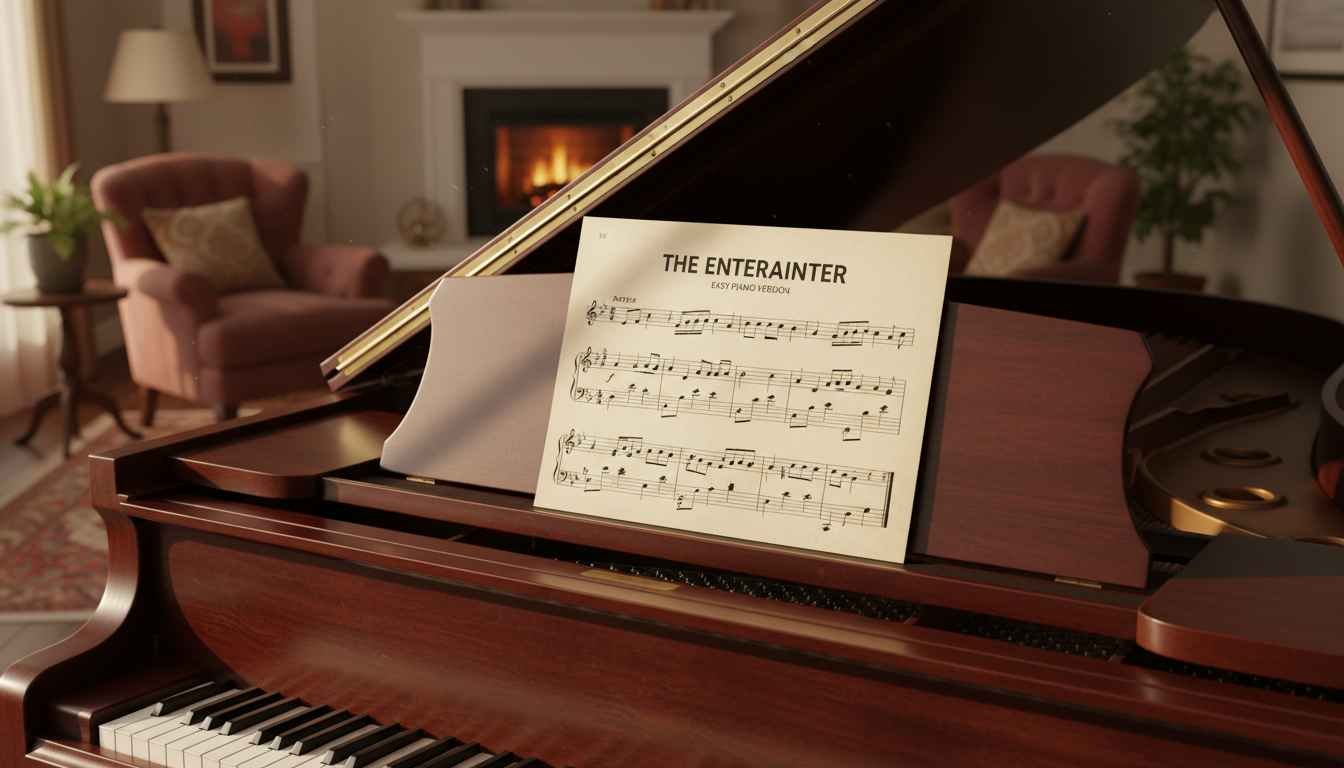
Have you ever felt like your fingers just can’t keep up with the melody you hear in your mind? I remember sitting at my old upright piano, staring at the sheet music for “The Entertainer,” feeling both excitement and frustration in equal measure. It was the first ragtime piece I truly wanted to master, yet its syncopated rhythms seemed almost like a foreign language to my younger self.
If I could write a letter to that younger version of me, I would tell her that mastering “The Entertainer” isn’t about rushing through the notes but about savoring the process. Each measure, each jump between octaves, carries its own charm. And while the original sheet music might look daunting, there are simplified versions available that allow a beginner to experience the joy of ragtime without being overwhelmed.
When I first discovered easy versions of “The Entertainer” sheet music, it was as if a door opened. Suddenly, the syncopation that had seemed impossible was broken down into manageable steps. I could feel the music in my fingertips, the keys responding to every push and pull, creating the playful, jaunty rhythm Scott Joplin intended. That tactile sensation, the vibration of each key under my fingers as the notes came alive, is something no recording or performance can fully replicate. This is the magic of playing for yourself.
After those first tentative steps, I started seeking guidance on performance nuances and stylistic interpretation. This is when I stumbled upon resources like Boston Theater, which not only provided access to musical performances but also deepened my appreciation for the historical context of ragtime. Observing live performances or even reading about the era in which Joplin composed brought the sheet music to life beyond the black-and-white staves on the page.
Did You Know?
“The Entertainer” was originally composed in 1902 and became one of Scott Joplin’s most famous ragtime pieces. Its resurgence in the 1970s movie “The Sting” helped bring ragtime back into popular culture, inspiring countless pianists to explore the genre.
It’s important to acknowledge that even the “easy” versions of this piece require patience and consistent practice. Learning the piece measure by measure, hand by hand, allows you to internalize the rhythm without rushing. Start slowly, even if it feels frustrating, and gradually build speed as your fingers grow more confident. The reward is not just in finishing the piece, but in the fluidity and satisfaction that comes from being able to play it with expression and joy.
Potential Drawbacks to Consider
While simplified sheet music makes the piece more accessible, it can sometimes sacrifice the depth of Joplin’s original composition. You may not experience the full richness of the syncopated rhythms or the playful counterpoint in the hands of an advanced pianist. Additionally, relying solely on easy arrangements without gradually progressing to more complex versions could limit your long-term growth. If you become too comfortable with simplified pieces, transitioning to the original score might feel challenging later.
Yet, these drawbacks are minor compared to the benefits of starting somewhere. Every pianist must begin with foundational steps, and using easy sheet music for “The Entertainer” is a gateway to exploring more intricate ragtime works. It’s an invitation to embrace both learning and performance as a journey rather than a race.
Looking back, I wish I had told my younger self to enjoy each tiny victory – hitting a tricky chord cleanly, nailing the rhythm in one phrase, or feeling the music flow naturally from one measure to the next. The physicality of playing, the lift of your hands as you reach for higher notes, and the subtle pressure adjustments needed to bring out melody and harmony – all these moments are worth savoring. These tactile experiences are what make the music personal and unforgettable.
So if you are just beginning your piano journey, do not shy away from “The Entertainer” because it looks difficult. Seek out the easy sheet music, take your time, and allow your fingers to discover the rhythm. Remember, music is not just about playing notes correctly – it’s about feeling, expression, and connecting with a legacy that stretches back over a century. The joy of performing a piece you love will stay with you long after the last note fades away.