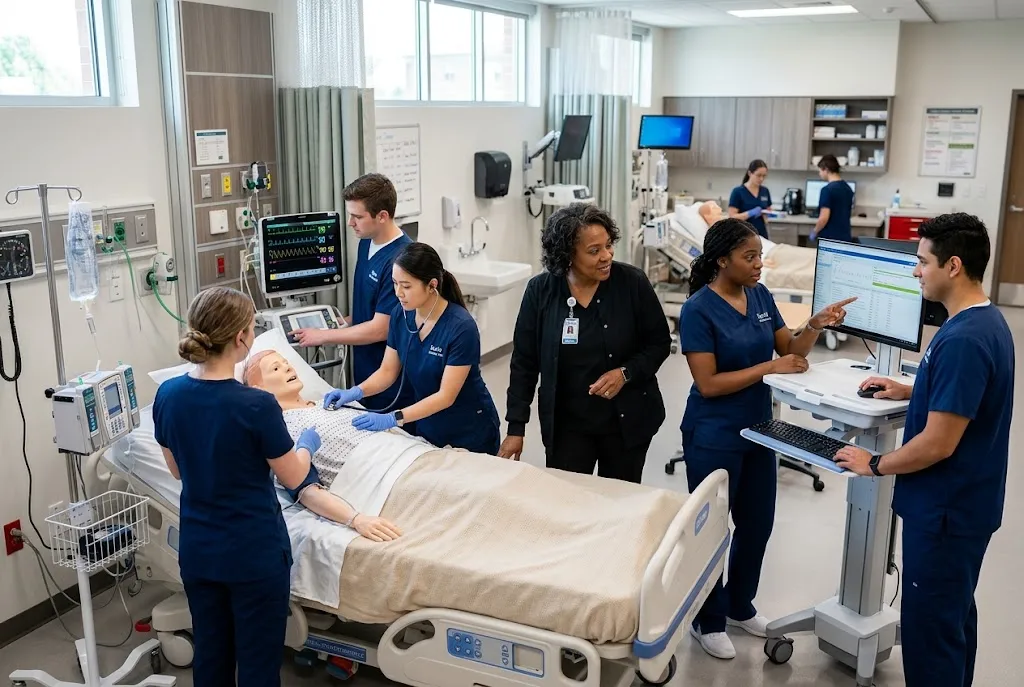

Understanding career development definitions can make it easier to plan education, build professional skills, evaluate opportunities, and make informed decisions throughout your working life. Career development is broader than choosing a job or earning a promotion. It is an ongoing process that connects self-awareness, learning, work experience, career decisions, and changing professional goals.
Whether you are entering the workforce, considering a career change, developing expertise, or preparing for leadership, a clear understanding of career development can help you identify the next step. It can also explain why career planning should continue even after you have established yourself in a profession.
What Is Career Development?
At its simplest, career development is the ongoing process through which people explore career options, develop relevant capabilities, make career decisions, gain experience, and adapt their professional direction over time.
The term includes both personal and professional factors. Interests, abilities, values, education, experience, goals, opportunities, workplace conditions, and changing circumstances can all influence how a person’s career develops.
This means career development does not have one universal path. Two people working in the same occupation can have very different career goals. One may want management responsibility, another may prefer specialized expertise, while a third may eventually move into entrepreneurship or another field.
The U.S. Bureau of Labor Statistics provides occupational information covering areas such as job duties, education requirements, work environment, pay, and employment outlook. Such information can support the career exploration and decision-making that form part of career development. Explore career and occupational information from the U.S. Bureau of Labor Statistics.
Career Development Definitions Explained
There are several ways to understand career development definitions, but most emphasize an ongoing relationship between a person and their working life.
Career development can be viewed as:
- A learning process: People continually acquire knowledge, skills, and experience.
- A decision-making process: Individuals make choices about education, occupations, employers, roles, and transitions.
- A growth process: Professionals develop capabilities and take on increasingly appropriate responsibilities.
- An exploration process: People investigate career possibilities and learn more about themselves.
- A transition process: Careers can change when people enter new occupations, industries, roles, or forms of work.
These perspectives are complementary rather than competing. Career development can involve all of them at the same time.
What Does Career Development Mean in Practice?
Asking what does career development mean in practical terms leads to a straightforward answer: it means intentionally managing and learning from your career journey rather than treating career decisions as isolated events.
For a student, this might involve researching occupations, selecting an educational pathway, gaining experience, and identifying useful skills.
For an early-career employee, it might mean learning workplace expectations, strengthening technical capabilities, finding mentors, and deciding which professional direction to pursue.
The For an experienced professional, career development might involve leadership development, specialization, professional networking, changing industries, mentoring others, or preparing for a new career phase.
The activities change, but the underlying process remains focused on understanding where you are, where you want to go, and what needs to happen between those points.
Key Elements of Career Development
A strong career development process usually combines several related elements. Focusing on only one element can create an incomplete picture of your career.
Self-Awareness
Self-awareness involves understanding your interests, values, strengths, skills, preferences, and areas you want to improve. This information can help you evaluate whether potential career options fit you.
Self-awareness can also change over time. Experiences at work and in education may reveal interests or strengths that were not obvious earlier in life.
Career Exploration
Career exploration involves learning about occupations, industries, employers, work environments, education requirements, and potential career paths.
Exploration is particularly important when you are uncertain about your direction. Instead of relying on assumptions, you can gather information from credible sources, professionals, practical experiences, and research.
Skill Development
Careers require capabilities. These can include technical knowledge, communication, leadership, problem-solving, digital skills, organization, and other occupation-specific abilities.
Skill development helps close the gap between your current capabilities and the requirements of your desired role.
Career Decision-Making
Career decisions can involve choosing a major, accepting a job, pursuing a certification, changing industries, seeking a promotion, or starting a business.
Effective decision-making considers multiple factors instead of relying on a single measure such as salary or job title.
Experience
Practical experience provides information that education and research cannot always provide. Internships, projects, employment, volunteering, apprenticeships, and other experiences can help you understand what different types of work actually involve.
Goal Setting
Career goals give development efforts direction. A goal might be short term, such as learning a particular software tool, or longer term, such as moving into a leadership role.
What Is a Career Development Process?
The career development process can be understood as a continuing cycle of assessment, exploration, decision-making, action, learning, and review.
A practical version of the process may look like this:
- Assess yourself: Identify your skills, interests, values, experience, strengths, and development needs.
- Explore options: Research occupations, industries, roles, and educational pathways.
- Set priorities: Decide what direction or development objective matters most right now.
- Create a plan: Identify the education, skills, experience, or relationships required.
- Take action: Complete relevant learning, gain experience, network, apply for opportunities, or pursue other practical steps.
- Review progress: Evaluate results and adjust your direction as circumstances change.
This process is cyclical. You may return to exploration after gaining new experience or reassess your goals after a major life or workplace change.
Career Development and Professional Growth
Career development and professional growth are closely connected, but they are not exactly the same thing. Professional growth focuses strongly on improving capabilities, performance, knowledge, and expertise. Career development encompasses those areas while also considering career direction, decisions, transitions, and long-term planning.
For a deeper look at professional capabilities, see our guide to professional growth and professional development skills. It explains how ongoing skill development can support career progress.
For example, learning project management may represent professional growth. Deciding that project management is the career direction you want to pursue, identifying the experience you need, and planning how to move into that role are broader career development activities.
Career Development and Personal Development
Career development is also influenced by personal development. Skills such as communication, confidence, self-awareness, adaptability, organization, and emotional awareness can affect how successfully a person manages professional responsibilities and decisions.
Our guide to personal development areas explores the individual capabilities and development goals that can complement career planning.
For example, someone preparing for leadership may need both professional knowledge and personal development in areas such as communication, confidence, listening, and decision-making.
This connection shows why career development should not be viewed solely as acquiring technical qualifications.
Stages of Career Development
Career development can be organized into broad stages, although people do not necessarily experience them in a fixed sequence.
Common stages include:
- Exploration: Learning about yourself and possible career options.
- Entry: Beginning to apply skills and knowledge in the workplace.
- Establishment: Building competence, experience, and professional credibility.
- Advancement: Pursuing greater responsibility, leadership, specialization, or other forms of progress.
- Transition: Changing occupations, industries, roles, work arrangements, or career direction.
People can revisit earlier stages whenever they change careers. Someone with ten years of experience in one occupation may become an explorer again when entering a completely different field.
Our detailed guide to the stages of career development explains these phases and how development priorities can change throughout a working life.
Why Career Development Is Important
Career development helps individuals take a more active role in their professional future. Without intentional planning, people can sometimes remain in roles simply because they are familiar, even when their interests or goals have changed.
A career development approach encourages regular reflection and learning. It can help you recognize opportunities, identify skill gaps, prepare for transitions, and make decisions with more information.
For employers and educational institutions, career development can also support workforce readiness and employee development. Helping people identify appropriate skills and career paths can improve the connection between individual capabilities and organizational or labor-market needs.
Examples of Career Development
Career development can take many forms. The following examples illustrate how the concept works in everyday situations.
Example 1: A College Student Exploring Careers
A student who is uncertain about a major might research occupations, speak with professionals, complete relevant coursework, participate in internships, and compare potential career paths.
The student’s career development involves exploration, self-assessment, learning, and decision-making.
Example 2: An Early-Career Professional
An employee who wants to become a project manager might identify gaps in project planning, communication, leadership, and budgeting. They could then volunteer for projects, complete relevant training, and seek feedback from experienced colleagues.
Here, professional growth supports a broader career development objective.
Example 3: A Professional Changing Industries
A marketing specialist moving into technology may identify transferable skills, research target roles, learn relevant technical concepts, build industry connections, and adjust their resume to highlight applicable experience.
This is career development through transition and reskilling.
What Does Developing a Career Involve?
Developing a career involves more than collecting qualifications. It requires making decisions about how you want to use your skills and experience over time.
Important activities can include:
- Learning about career opportunities
- Building technical and transferable skills
- Seeking meaningful work experience
- Developing professional relationships
- Finding mentors and learning from experienced professionals
- Setting realistic career objectives
- Evaluating job opportunities
- Preparing for interviews and career transitions
- Continuously updating professional knowledge
- Reviewing your career direction periodically
Not every activity is necessary for every person. The appropriate combination depends on your career stage and goals.
Career Development Definitions Across Different Contexts
The phrase definition career development can mean slightly different things depending on the context.
In education, career development may emphasize career awareness, exploration, academic choices, employability, and preparation for work.
In the workplace, it may emphasize employee learning, professional development, advancement, leadership, performance, and internal mobility.
For an individual changing careers, it may focus more heavily on transferable skills, exploration, reskilling, networking, and transition planning.
Although the emphasis changes, the central idea remains consistent: career development is a continuing process of making informed career decisions and building the capabilities and experiences needed to pursue meaningful professional goals.
How Career Counseling Supports Development
Some career decisions are difficult to make alone. Career counseling can provide structured support for people who are uncertain about their options, need help understanding their strengths, or are preparing for a transition.
Career counseling may involve assessment, career exploration, decision-making support, goal setting, job-search assistance, or career transition planning.
Our guide to career counseling interventions explains the different approaches and how they can be used in various career situations.
Counseling does not eliminate the need for personal responsibility. Instead, it can provide a structured environment for examining options and developing practical next steps.
Creating Your Own Career Development Framework
You can turn the concepts above into a simple personal framework.
Start With Your Current Situation
Identify your current role, experience, strengths, challenges, responsibilities, and satisfaction level. This gives you a starting point.
Define Your Direction
Think about what you want next. You might want greater responsibility, a different industry, deeper expertise, better work-life fit, or a completely new occupation.
Identify the Gap
Compare your current capabilities with the requirements of your desired direction. Identify the skills, knowledge, experience, relationships, or credentials you need to develop.
Create Practical Actions
Choose actions that directly address the gap. These might include training, projects, networking, mentoring, volunteering, applications, or additional education.
Review and Adapt
Career development should remain flexible. Review your progress and adjust your plan when you gain new information or your priorities change.
Common Misunderstandings About Career Development
Several misconceptions can make career planning unnecessarily difficult.
Career Development Means Getting Promoted
A promotion can be career development, but it is only one possible outcome. Greater expertise, a career change, entrepreneurship, meaningful work, or improved professional fit can also represent development.
Career Development Ends After Education
Formal education is only one part of the process. Learning and development can continue throughout a working life.
You Need a Permanent Career Plan
Long-term planning is useful, but careers can change. A flexible direction is often more realistic than a rigid plan that assumes nothing will change.
Career Development Is Only About Technical Skills
Technical expertise matters, but communication, adaptability, leadership, self-awareness, and decision-making can also influence career outcomes.
How to Make Career Development More Effective
A practical approach is to connect every development activity with a meaningful objective. Before taking a course, earning a certification, or joining a professional group, ask how the activity supports your desired direction.
It is also useful to focus on evidence. Instead of simply saying you want to become a better communicator, look for opportunities to practice communication and gather feedback. Instead of saying you want leadership experience, take responsibility for a project where leadership can be demonstrated.
Small, relevant actions can build momentum without requiring you to redesign your entire career at once.
Final Thoughts on Career Development Definitions
The most useful career development definitions describe career development as an ongoing process of exploration, learning, decision-making, experience, growth, and adaptation. It is not simply a job search or a promotion strategy.
Career development begins with understanding yourself and your options. It continues through education, skill building, work experience, professional relationships, goal setting, and career decisions. As your circumstances change, you may revisit earlier stages and redefine your direction.
The key is to remain intentional without becoming rigid. Understand where you are, identify where you want to go, determine what needs to change, and take practical steps toward that direction. With regular reflection and continuous learning, career development can become an ongoing process that supports a stronger and more adaptable professional life.