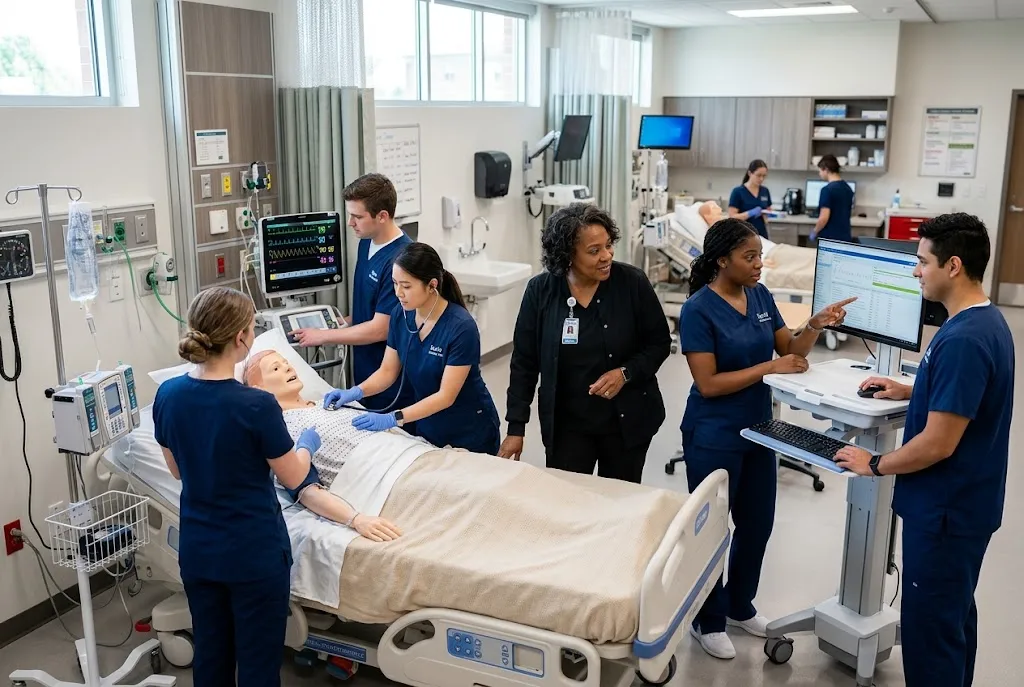

Real-world upskilling examples can make career development more practical by showing how professionals can turn skill gaps into specific learning and experience goals. Whether you want to qualify for a new position, improve your performance, adapt to changing technology, or prepare for long-term career growth, upskilling gives you a structured way to strengthen the abilities employers value.
Upskilling does not always require returning to school or earning another degree. Depending on your career goal, it may involve learning new software, improving communication, completing targeted training, developing technical skills, taking on a new workplace responsibility, or building a project that demonstrates what you have learned.
What Is Upskilling?
Upskilling is the process of developing new or improved skills that help you perform better in your current career or prepare for future opportunities. It usually builds on what you already know rather than requiring you to completely change professional direction.
For example, a marketing professional might learn analytics and search engine optimization to become more effective in a digital marketing role. An administrative professional might develop project management and data analysis skills to qualify for broader responsibilities.
Upskilling can involve technical abilities, industry knowledge, communication, leadership, digital literacy, problem-solving, or other transferable skills.
Why Upskilling Examples Matter for Career Development
Knowing that you need to “improve your skills” is not enough to create an effective development plan. Specific examples make the idea easier to act on.
Consider the difference between these two goals: “I want to become better with technology” and “I will learn spreadsheet analysis, create three reporting projects, and use those skills in my current role.” The second goal is more measurable and connected to practical outcomes.
Strong upskilling also helps professionals respond to changing workplace expectations. Technology, business practices, and job requirements can evolve over time. Regularly reviewing your skills allows you to identify areas where additional learning could improve your career position.
Upskilling Examples for Digital Skills
Digital skills are relevant across many occupations, not only technology careers. Employers in marketing, finance, administration, education, healthcare, sales, operations, and other fields may expect employees to work confidently with digital tools.
Practical digital upskilling examples include:
- Learning advanced spreadsheet functions and data organization.
- Improving proficiency with workplace collaboration platforms.
- Learning basic data visualization.
- Developing digital project management skills.
- Learning how to use customer relationship management software.
- Improving cybersecurity awareness.
- Learning responsible applications of artificial intelligence.
- Developing basic website or content management skills.
The right choice depends on your occupation and career goals. Instead of collecting digital skills randomly, identify the tools and capabilities that appear regularly in relevant job descriptions or are becoming important within your industry.
Upskilling Examples for Communication
Communication is a transferable skill that can strengthen performance across almost every professional environment. Improving communication can also help employees prepare for leadership, client-facing, or collaborative responsibilities.
Examples include improving business writing, presentation skills, active listening, professional email communication, meeting facilitation, negotiation, and public speaking.
A practical approach is to combine learning with application. For example, someone working on presentation skills could volunteer to present a project update, request feedback, and use that feedback to improve the next presentation.
This turns a soft-skill goal into observable workplace experience.
Upskilling Examples for Leadership
Leadership development is not limited to people who already have a management title. Employees can begin building leadership capabilities by taking responsibility for projects, coordinating teams, mentoring colleagues, or improving workplace processes.
Useful leadership-focused upskilling examples include:
- Learning delegation and task prioritization.
- Practicing constructive feedback.
- Developing conflict-resolution skills.
- Improving decision-making.
- Learning project planning.
- Building coaching and mentoring abilities.
- Improving strategic thinking.
One of the strongest ways to develop leadership skills is to apply them to real responsibilities. A course can provide knowledge, but leading an actual project can provide evidence that you can use that knowledge effectively.
Upskilling Examples for Data and Analytical Skills
Data-related skills can be useful far beyond traditional data careers. Professionals increasingly encounter reports, performance indicators, customer information, budgets, forecasts, and other forms of business data.
Depending on your role, upskilling might involve learning spreadsheet analysis, data visualization, basic statistics, reporting, database concepts, or business intelligence tools.
A practical project could involve taking a small dataset, organizing it, identifying meaningful patterns, creating a simple visualization, and explaining what the findings mean for a business decision.
This type of project demonstrates more than course completion because it shows the ability to apply analytical knowledge.
Upskilling Examples for Artificial Intelligence
Artificial intelligence is becoming an important area of professional development across many industries. However, AI upskilling does not mean every employee needs to become an AI engineer.
For many professionals, useful AI-related development may include learning how to evaluate AI-generated information, write effective prompts, automate repetitive tasks, use AI responsibly, understand basic AI concepts, or integrate AI tools into existing workflows.
For example, a content professional might learn how to use AI for brainstorming and research organization while maintaining human editorial review. A project manager might explore AI-supported documentation or workflow analysis.
The goal should be practical improvement rather than simply adding “AI” to a resume.
Upskilling Examples for Industry-Specific Skills
Some of the most valuable skills are specific to an occupation or industry. A healthcare worker, financial professional, educator, technician, marketer, and software developer may all require very different forms of development.
Industry-specific upskilling can include learning updated regulations, professional software, technical procedures, emerging standards, specialized equipment, or new business practices.
Start by reviewing current job postings and professional resources in your field. Look for skills that appear repeatedly. Those patterns can help you determine which areas deserve priority.
Upskilling Strategies That Produce Better Results
Choosing the right skill is only the beginning. The way you approach learning can determine whether upskilling produces meaningful career results.
Start With a Skill Gap
Begin by identifying a specific gap between your current abilities and your desired career outcome. Your target might be a promotion, a new position, greater responsibility, or improved performance in your existing role.
Once the destination is clear, determine which skills are most important for reaching it.
Prioritize High-Value Skills
You do not need to learn everything at once. Prioritize skills that are both relevant to your goals and useful in the workplace.
Compare job descriptions, talk to professionals in your field, review employer expectations, and consider feedback from your current manager or colleagues.
Learn Through Multiple Formats
Different skills require different learning methods. Online courses can provide structured instruction, while books and documentation can deepen knowledge. Workshops can offer guided practice, and workplace projects can provide real-world application.
Combining learning formats can make development more effective than relying on a single course or resource.
Practice What You Learn
Knowledge becomes more valuable when you can apply it. After learning a skill, look for a project, workplace assignment, volunteer opportunity, or personal project where you can use it.
Practical application also helps you discover what you still need to improve.
How to Choose Upskilling Programs
There are many upskilling programs available, but not every course or certification is equally useful for every career goal.
Before choosing a program, consider what it teaches, who provides it, how current the material is, whether practical projects are included, and whether the resulting skill is relevant to the jobs you want.
Also consider the credibility of the provider and whether employers in your field recognize the credential. A certificate can support your development, but it should complement demonstrated skills and experience rather than replace them.
Government resources such as CareerOneStop’s training and education resources can also help workers and job seekers explore training options and career-related learning opportunities.
Workforce Upskilling: Why Employers Invest in Skills
Upskilling is not only an individual responsibility. Organizations can also invest in workforce development to strengthen internal capabilities and prepare employees for changing business needs.
Workforce upskilling programs may include employer-sponsored courses, mentoring, internal workshops, professional certifications, leadership programs, tuition assistance, job rotations, or structured development plans.
For employees, employer-supported development can provide a valuable opportunity to build skills while gaining practical experience. For organizations, it can help develop existing talent instead of relying entirely on external hiring for every new capability.
Upskilling and Reskilling Are Not the Same
Upskilling and reskilling are related but different concepts. Upskilling generally means adding or improving skills that support your existing career direction. Reskilling usually involves learning a substantially different set of skills to move into another role or occupation.
For example, a customer service representative who learns advanced customer relationship management tools is upskilling. If that same worker trains for an entirely different occupation such as software development, the process would involve more extensive reskilling.
Understanding the difference can help you choose a development strategy that matches your actual career goal.
How Skills Demand Should Influence Upskilling
Career development becomes more effective when learning decisions are connected to real skills demand. Instead of asking only, “What would be interesting to learn?” ask, “Which skills could improve my ability to achieve my career objective?”
Current job postings are a useful source of information because they show what employers are requesting. Look for patterns across multiple organizations rather than assuming one posting represents an entire profession.
You should also consider whether a skill complements your existing strengths. A skill becomes particularly valuable when it helps you solve problems, perform responsibilities, or qualify for opportunities that align with your career direction.
Create an Upskilling Plan With Measurable Goals
A practical upskilling plan should turn a broad development objective into specific actions.
You can structure your plan around these steps:
- Define the career objective: Decide whether you want a promotion, career transition, stronger performance, or access to new opportunities.
- Identify skill gaps: Compare your current abilities with the requirements of your target role.
- Rank priorities: Choose the most important skills instead of attempting to learn everything simultaneously.
- Select learning resources: Choose courses, training, mentoring, documentation, or other appropriate resources.
- Create practice opportunities: Find ways to apply the new skill through projects or workplace responsibilities.
- Document progress: Keep evidence of completed projects, results, credentials, and new responsibilities.
- Review your plan: Reassess your progress and adjust your priorities as your career goals or workplace requirements change.
This approach makes professional development easier to measure and connect to real career outcomes.
How to Show New Skills to Employers
Learning a skill is only part of the process. You also need to communicate what you can do with it.
Add relevant skills to your resume when you can support them with genuine knowledge or experience. Include projects that demonstrate application. During interviews, explain how you used the skill to solve a problem or complete a task.
For example, instead of simply listing “data analysis,” describe a project where you analyzed information, identified a pattern, created a report, or supported a decision.
This evidence makes your development more credible because employers can see the connection between learning and performance.
Common Upskilling Mistakes to Avoid
One common mistake is collecting courses without applying the knowledge. Completing multiple programs may feel productive, but employers often care more about what you can actually do.
Another mistake is following trends without considering career relevance. A popular technology or certification may not be useful for your specific professional direction.
Some people also try to develop too many skills at once. Spreading your attention across ten unrelated areas can produce less progress than focusing deeply on two or three high-priority capabilities.
Finally, avoid assuming that a certificate automatically demonstrates competence. Whenever possible, combine formal learning with practical projects, workplace application, and measurable outcomes.
Connect Upskilling to Long-Term Career Growth
Upskilling should support a broader career strategy rather than becoming an endless cycle of learning without direction. Once you identify your target roles and skill priorities, consider how those capabilities can contribute to advancement.
Your development plan may eventually connect with AI-supported career planning, career coaching, and broader career evaluations. For example, understanding how AI can support career development can help you organize skill research and learning goals, while a future career assessment can help you evaluate whether your development efforts are moving you toward the right opportunities.
This creates a connected process: assess your direction, identify skill gaps, develop relevant abilities, apply them in practice, and evaluate your progress.
Final Thoughts on Upskilling Examples
The most useful upskilling examples are not simply lists of popular skills. They show how a person can identify a career goal, recognize a skill gap, choose appropriate learning, practice the new capability, and use it to create better professional opportunities.
Whether you are improving digital skills, communication, leadership, analytics, artificial intelligence knowledge, or industry-specific capabilities, start with the outcome you want to achieve. Then work backward to determine which skills will help you get there.
Effective upskilling is a continuous process. By focusing on relevant skills, practical experience, measurable goals, and changing employer expectations, you can make professional development more intentional and create a stronger foundation for long-term career growth.